By Rafael Leon, CEO of the Chicago Metropolitan Housing Development Corporation
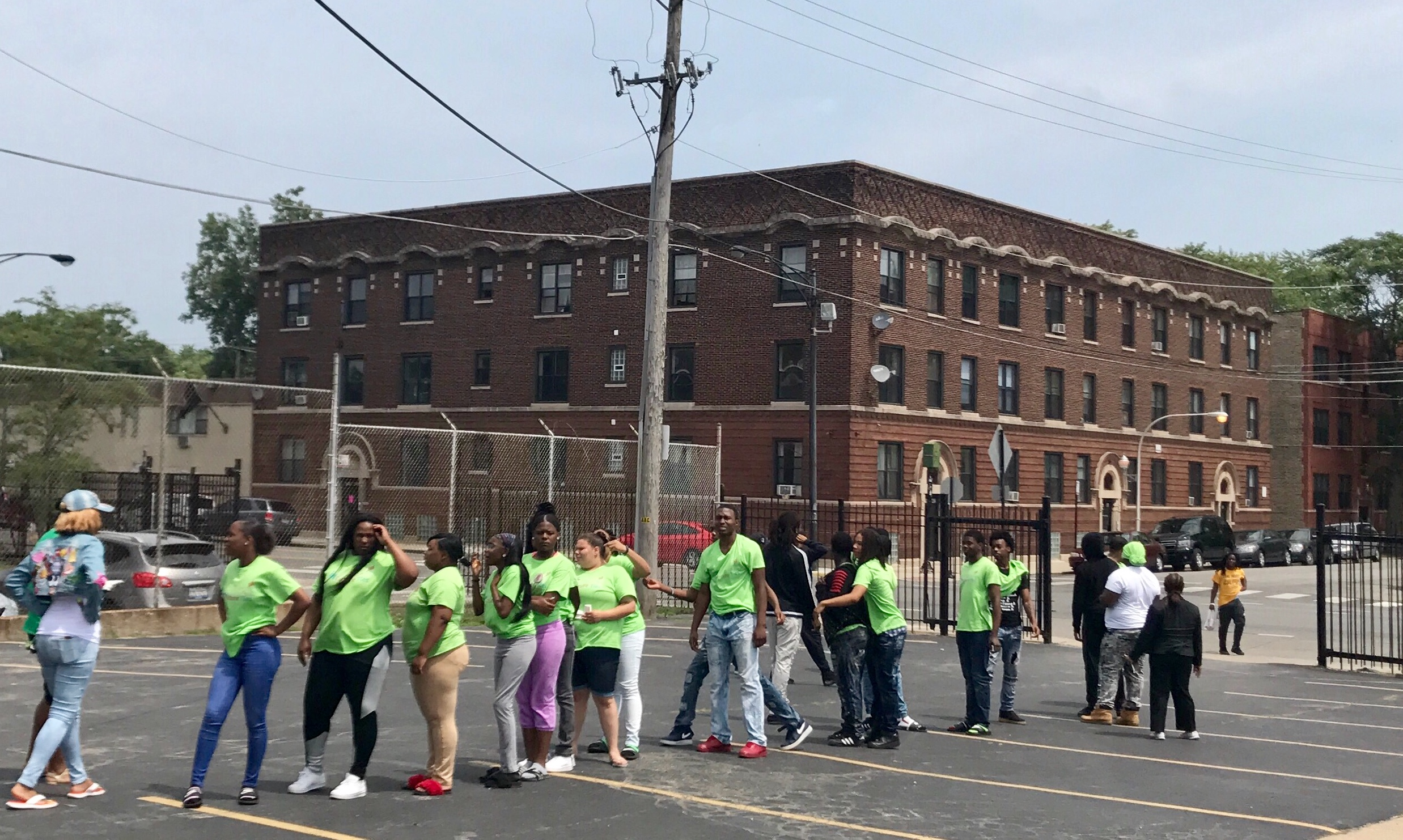
If you’ve read my first post in this series, you know our model at CMHDC. We acquire multifamily buildings on the open market in changing neighborhoods, preserve them as affordable rentals, stabilize them, and later refinance to fund the next acquisition. Our approach is significantly cheaper per unit than new LIHTC construction and faster to close, allowing us to efficiently and cost effectively serve working families.
The model isn’t the problem. The problem is sourcing equity capital.
Here’s why the equity capital matters. Acquiring a multifamily property isn’t complicated -any bank will finance a qualified borrower with a reasonable debt coverage ratio. The problem is that banks don’t finance 100% of the purchase. They want to see equity in the deal, typically 20% to 30% of acquisition cost, before lending. For a mission-driven organization preserving affordable housing at below-market rents, finding that equity is the biggest hurdle.
For a conventional real estate investor, equity capital comes from profits, partners, and a track record of returns that attract private capital. For a nonprofit preservation organization, the options are narrower, and the capital community sector hasn’t done enough to expand them.
What Government Can and Cannot Do
The instinct in the affordable housing community is to look to government to solve the equity problem. That instinct is understandable and sometimes right. But it’s worth being clear about the tradeoff: government funding makes housing expensive. It comes with compliance requirements, approval timelines, reporting obligations, and layered restrictions that add cost and complexity to every transaction. The $600,000 plus-per-unit new LIHTC development in Chicago isn’t overpriced because developers are inefficient. It’s priced that way because of requirements baked into the public programs that fund it.
Government can help without providing direct subsidies. Tax incentives can make an investment in a nonprofit’s acquisition fund equally or more attractive than a comparable market-rate deal, and regulatory changes can make it easier for banks to take equity positions in preservation transactions. Both approaches cost less than direct subsidy and could unlock significantly more capital than they cost.
Banks as Equity Partners
A year ago, CMHDC closed an acquisition with a local bank - Bank Financial (now First Financial) - as an equity partner. The bank believed in the mission, secured regulatory approval for their investment, and structured a deal in which they receive a modest annual return and their principal back at the end of a ten-year term. No waterfall distribution. No participation in upside from refinancing or sale. Just a modest return, mission alignment, and a CRA-eligible investment, and all of returns beyond their initial investment stayed with our non-profit entity so that we could invest in another transaction.
It worked. The building is being maintained as affordable housing. The bank got a CRA-friendly investment, and a deeper relationship with a well-run nonprofit. The transaction took less time to complete than it would have taken just toassemble the financing team on a comparable LIHTC deal.
This model should be replicable. The regulatory framework for bank equity participation in community development exists. The bank went to the Office of the Comptroller of Currency (OCC) and got approval to make an equity investment in the acquisition, with a provision that the end beneficiaries would be low-income individuals at 80% of Adjusted Median Income (AMI). They got approval from the regulatory agency to proceed and provided the needed equity to close on the transaction. Why? Because they believed in the mission of the organization and because we have been successfully using this model for decades. The difference is that in the past we provided 100% of the equity. In this instance we split it 50/50, which helped us close the financing gap and stretch our limited resources.
What stops us, and other mission driven organizations, from doing more is simple. Finanical institutions are less likely to have an appetite for doing these deals if there is a limited track record of successful equity capital partnerships that give banks the confidence to approve them. Organizations like ours can help build that confidence based on our successful track record: At CMHDC, we have never lost money on a transaction, and we need more banks who are willing to have a conversation.
Foundations
Many major foundations have built their theories of change around human capital development - education, workforce, health. That’s legitimate work. But their theories rest on the assumption that the people they serve have stable places to live. In many of the communities where foundations work, that assumption no longer holds.
Housing stability is foundational - in the most literal sense - to the outcomes that foundations care about. A foundation that invests in early childhood education and then watches the families they serve become displaced by rising rents does not have a complete human capital strategy.
Recently, more and more organizations have recognized this and are making real and tangible investments in affordable housing preservation.
- The Annie E. Casey Foundation, in partnership with Enterprise Community Partners, created the Renter Wealth Creation Fund, to preserve affordable rentals while sharing a portion of property-level profits with long-term residents. That’s not a grant. It’s a structured investment that advances the foundation’s mission and generates a return. More foundations could be doing something similar.
- McKenzie Scott through Yield Giving has given billions of dollars to organizations that work in community development, many of which facilitate affordable housing and give non-profit organizations a respite from their constant struggle to raise funds for their operations. That kind of giving allows the non-profits to concentrate on delivering tangible results.
The argument isn’t that foundations should stop funding human capital development. It’s that they should recognize affordable housing preservation as a force multiplier to their work.
Employers
The least obvious opportunity is employers. Amazon’s Housing Equity Fund has deployed more than $2 billion in markets where its workforce concentration is highest - a direct recognition that corporate success depends on workforce stability, and workforce stability depends on housing affordability.
Most employers aren’t as big as Amazon. But the same logic scales down. All large regional employers hospital systems, universities, manufactures – have a significant percentage of employees who are spending more than 30% of their income on housing or commuting 90 minutes each way because they can’t afford to live near work. These employers have a direct financial interest in affordable housing preservation in the surrounding community. The question is whether they know how to do something about it, and whether the affordable housing sector is ready to show them.
Partnering with a nonprofit preservation organization as an equity investor - not as a donor, but as a capital partner with modest financial returns and meaningful community impact - is a model that works for the right employer and the right deal. It requires patient capital and a long-term relationship. It also requires an affordable housing organizations that can make the case in way that resonates best with the employer.
Family Offices
Family offices represent a different kind of opportunity. Many are actively looking for program-related investments that generate consistent returns while advancing a social mission, and affordable housing preservation is a natural fit. The investment profile is straightforward: a stable, cash-flowing asset in an appreciating market, with a nonprofit operator that has decades of demonstrated performance and no losses on the portfolio. The return expectations are modest by design, but the impact is concrete and local in a way that many family offices find compelling. Unlike a LIHTC fund or a large institutional vehicle, a direct equity partnership with an organization like CMHDC offers something harder to find: a real relationship with a real portfolio in a real community. For families that have built wealth in communities like Chicago and have a deep connection to where they live, that is not a small thing.
The Big Ask
The work CMHDC has done over the past 30 years demonstrates that our model is viable. The units are there. The buildings are there. The neighborhoods that need preservation are identifiable today. What is needed is equity capital from sources that haven’t historically thought of themselves as affordable housing investors - banks, foundations, and employers who understand that the workforce housing problem is also their problem.
Government alone will never solve this, but it doesn’t need to. Private capital is not the enemy and it must be part of the solution because it exists - in banks, foundations, family offices, and corporate balance sheets - and it is ready to be put to work. The only question is whether they are willing to roll up their sleeves and we are willing do the hard work of helping them get it done.
Rafael Leon is a regular contributor to the Affordable Housing Handbook and the Chief Executive Officer of the Chicago Metropolitan Housing Development Corporation, a non-profit real estate corporation serving the Chicago metropolitan area and dedicated to preserving affordable housing with a particular focus on emerging and changing communities.
You can learn more about the great work that Rafael and his team are doing in Chicago, here.