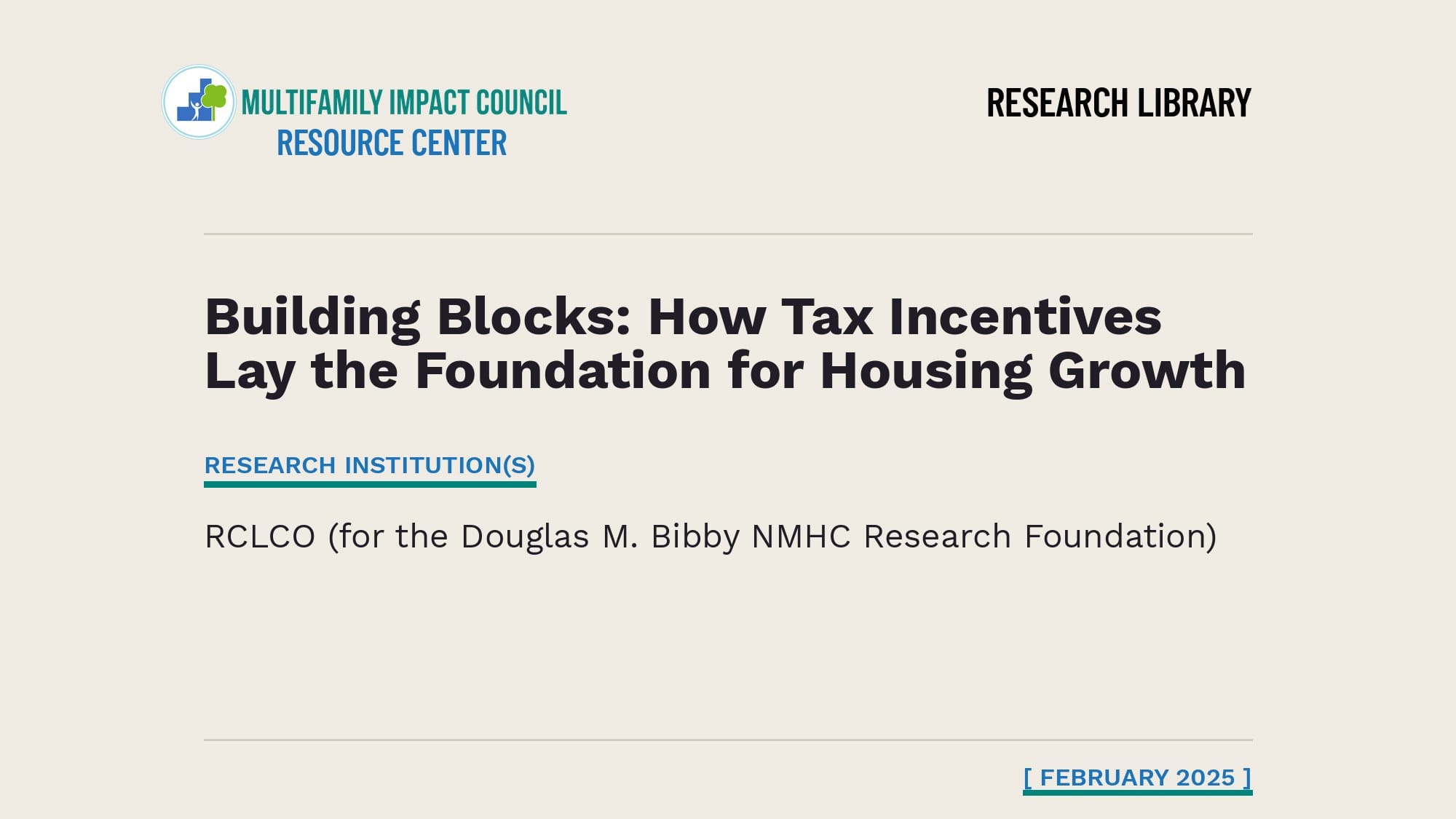
Research from RCLCO for the Douglas M. Bibby NMHC Research Foundation quantifies the fiscal return on tax incentives used to unlock multifamily development. Drawing on eight case study localities, the analysis measures the dollar of new economic activity generated per dollar of foregone property tax revenue, and tracks the affordable units delivered above program requirements.
Specifically, the RCLCO research found that:
- Every dollar of property tax abatement subsidy generated between 1.83 and 39.82 dollars of associated economic activity across the eight case studies.
- Programs that combined tax abatement with clear affordability requirements attracted deeper mixed income development than by-right zoning alone.
- Program design details, including duration, phase-in, and clawback provisions, materially shaped both the fiscal and affordability outcomes.
Methodology and Context
RCLCO built comparative case studies for eight programs across Minneapolis, Portland, St. Louis, Buffalo, Seattle, Los Angeles, Manhattan, and San Antonio, collecting program terms, permitted unit counts, actual delivered units, affordability shares, and estimated property tax abatements. The team then estimated associated construction spending, ongoing operations, and downstream fiscal impact to compute a return per dollar of incentive across each program.